Chichen Itza Equinox: The Serpent Shadow, Dates and Private Tour Guide
Twice a year the setting sun turns the corner of El Castillo into a serpent of light and shadow slithering down the stairs. It is spectacular, it is mobbed, and a private tour is the difference between seeing it and standing in a crush.
At a glance: equinox dates and timing
Dates are approximate planning ranges; the astronomical equinox falls on a specific day each year, so confirm it before booking.
What is the equinox shadow serpent?
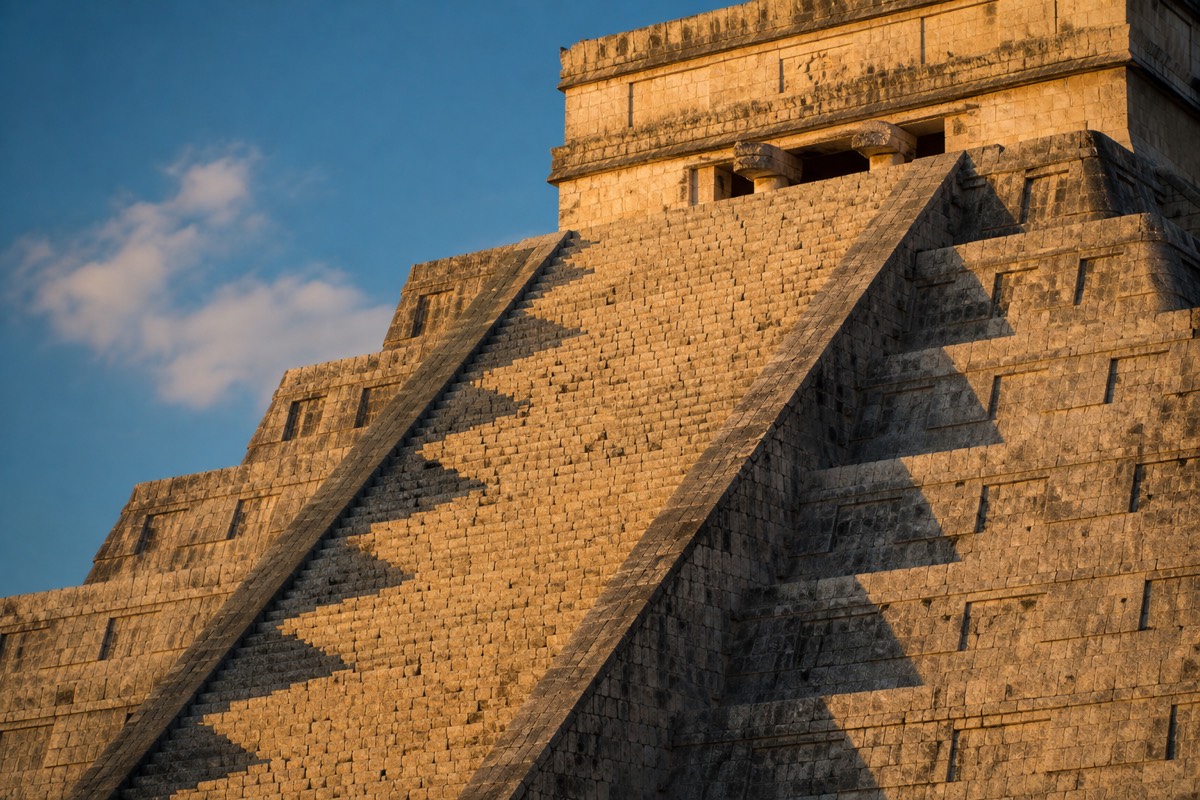
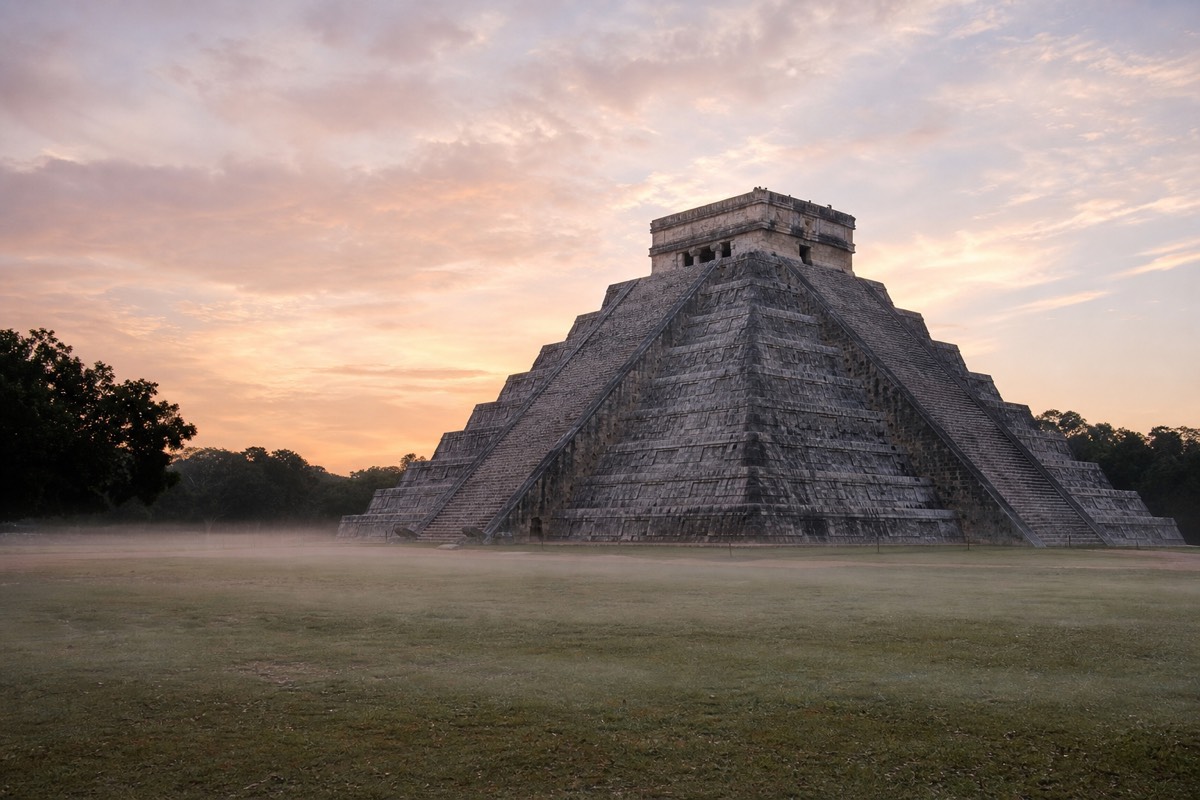
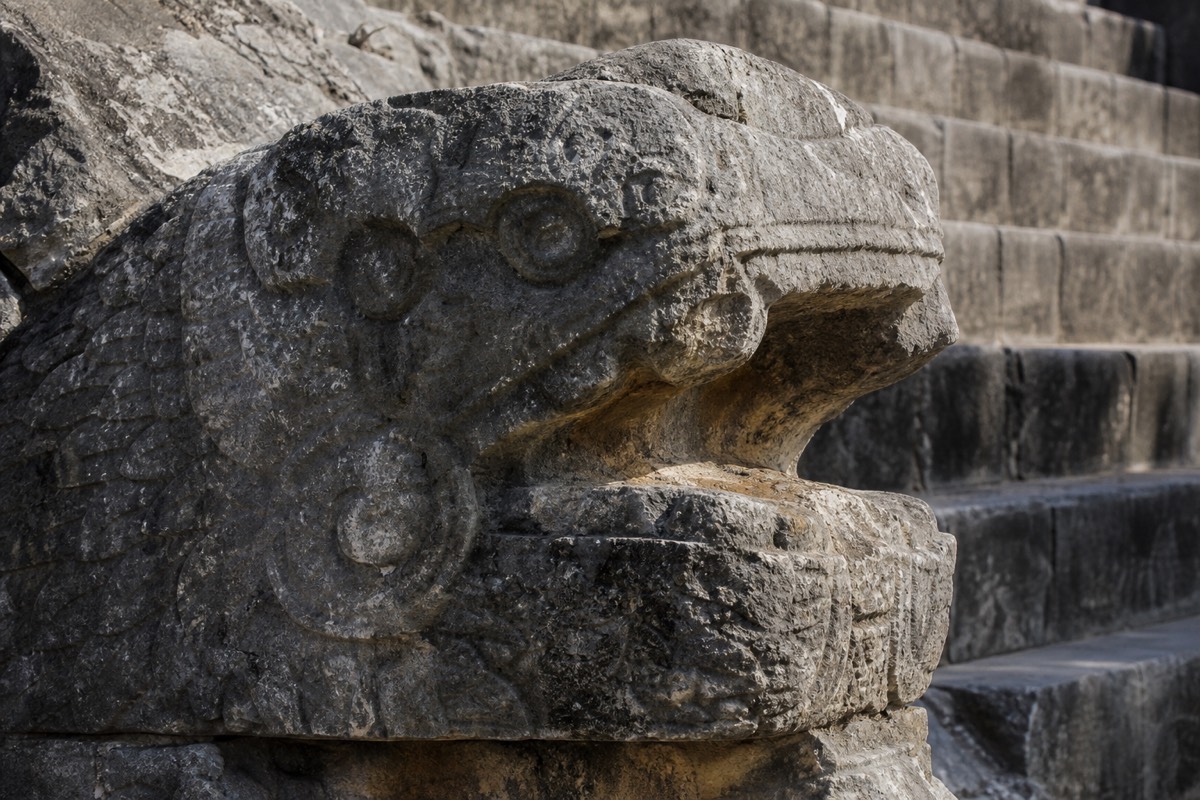
Twice a year, on the spring and autumn equinox, the late-afternoon sun strikes the stepped corner of El Castillo and casts a row of triangular shadows down the northern staircase. Aligned with the carved stone serpent head at the base, it reads as Kukulkan, the feathered serpent god, slithering down the pyramid. It is a deliberate feat of Maya astronomy and engineering.
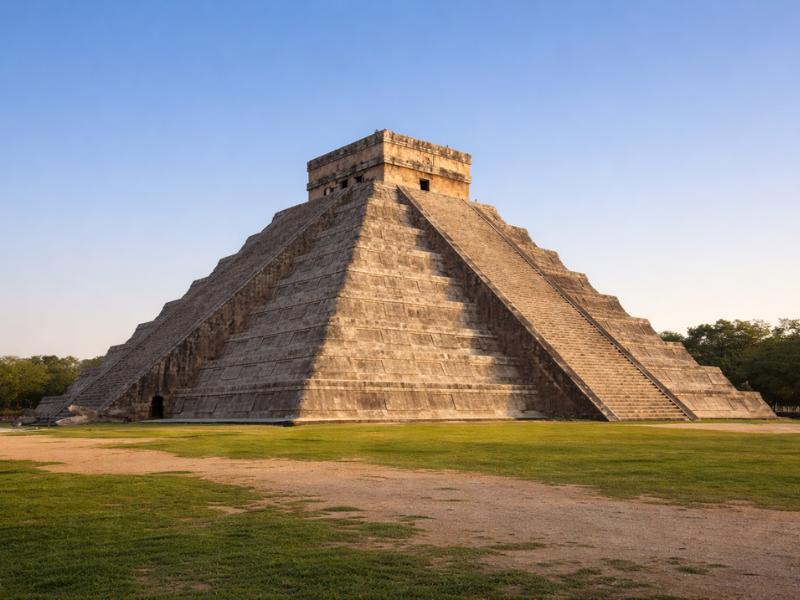
El Castillo is not just a pretty pyramid. Its nine terraces, its stairways and its orientation were built to track the sun, and the equinox effect is the most famous proof. As the sun sinks, the northwest edge of the terraces throws a zigzag of light and shadow along the balustrade of the north stairs. At the foot of that balustrade sits a sculpted serpent head. For a stretch of the afternoon, shadow and stone appear to connect into one long descending snake.
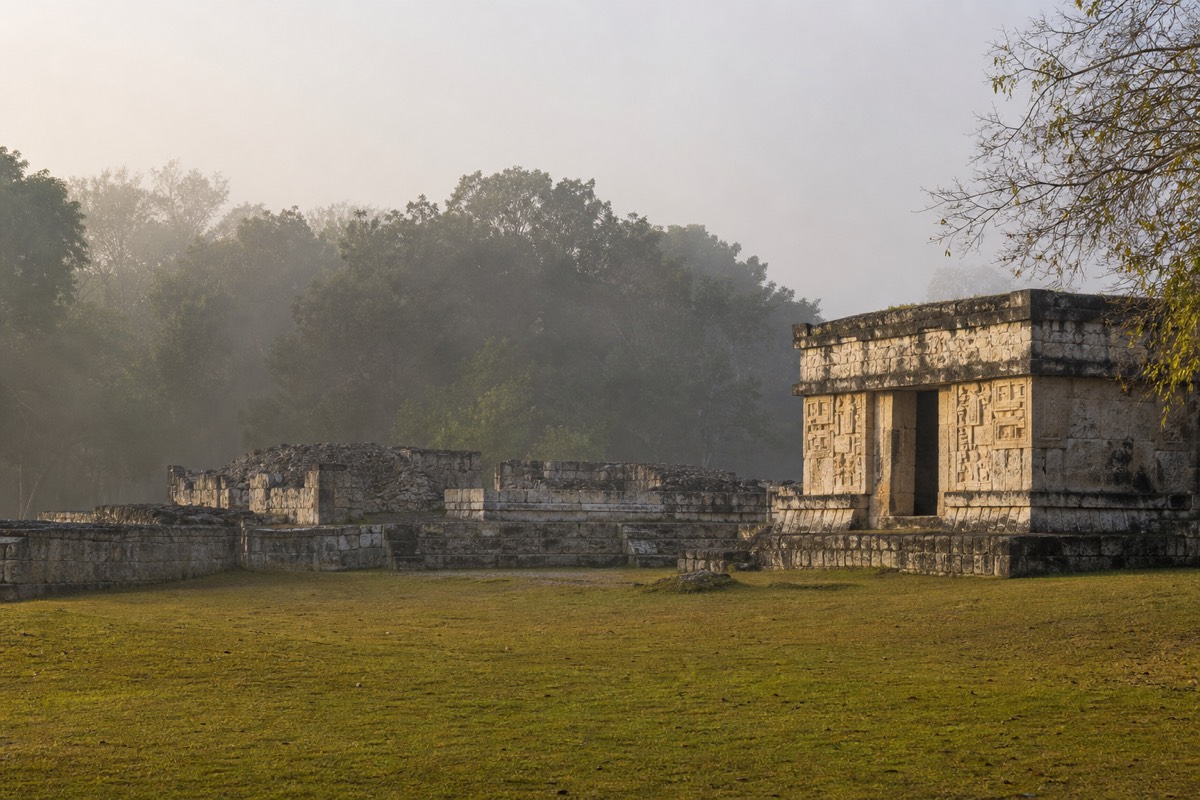
This is one reason the site holds a UNESCO World Heritage listing and a spot among the New Seven Wonders of the World. The Maya were not decorating. They were encoding a calendar into architecture, and the serpent is the moment that calendar performs in public. Whether or not you catch the exact effect, understanding it changes how you see every other line of the building.
Kukulkan, the feathered serpent, was one of the central deities of the Maya world, and El Castillo is in a real sense a temple built to him. The pyramid has four stairways of ninety-one steps each, which with the top platform total 365, the days of the solar year. The nine terraces split by each staircase read as eighteen sections, echoing the eighteen months of the Maya calendar. None of this is coincidence, and the equinox serpent is the design revealing its own logic. When a guide points out that the building is essentially a stone almanac, the shadow stops looking like a trick of light and starts looking like a message left on purpose.
The science: why the shadow appears
The effect is pure geometry. Around the equinox the sun sets almost due west, and its low, late rays hit the pyramid's tiered northwest corner at just the right angle to project a stack of light-and-shadow triangles onto the north balustrade. Those triangles line up with the carved serpent head at the base, completing the illusion of a body descending the stairs.
Two things make it work. First, the pyramid's terraces have a stepped profile, so their corner casts a jagged, not a straight, shadow. Second, the whole structure is oriented so that this jagged edge falls precisely along the stairway on the equinox rather than off to the side. Get the season wrong and the shadow lands in the wrong place. Get the time of day wrong and the sun is too high for the triangles to form at all. That is why both the date and the roughly 3:00 to 5:00 PM window matter.
It is worth being honest about one point: cloud cover can spoil the show. The serpent needs direct late-afternoon sun. On an overcast day the shadows soften and the effect fades. There is no fixing that, which is part of why our team treats the equinox as a bonus rather than a guarantee, and why we build the day so it is worthwhile even if the sky does not cooperate.
The effect also builds and fades rather than switching on. Early in the window the top triangles appear faint and disconnected. As the sun drops through the late afternoon, they sharpen and lengthen, one segment joining the next, until the shadow body appears to reach the carved serpent head at the base of the balustrade. Then, as the sun sinks further, it dissolves. That arc runs over roughly ninety minutes, which is why patience matters. Visitors who glance at the pyramid at the wrong moment and wander off often miss the peak by twenty minutes. A guide who knows the rhythm keeps your group looking at the right time.
One common misconception is worth clearing up: you do not climb or enter anything to see the serpent. Climbing El Castillo has been prohibited for years, since a fatal fall in the mid-2000s, and the ban is enforced by site security. The good news is that the effect was never meant to be seen from the stairs. It is a public spectacle, designed to be read from the plaza in front of the north face, exactly where the crowds gather. You watch from ground level, which is also the safest place to be in a dense crowd.
Exact dates and times, 2026 and 2027
The serpent forms on the equinoxes: in spring around March 20 to 21, and in autumn around September 21 to 23. The viewing window is late afternoon, roughly 3:00 to 5:00 PM, as the sun drops. The astronomical equinox lands on a specific day each year, so confirm the exact date before you commit, since operators often stage viewings across the immediate window.
| Year | Spring equinox | Autumn equinox | Serpent best seen |
|---|---|---|---|
| 2026 | Around March 20 to 21 | Around September 21 to 23 | Late afternoon, about 3:00 to 5:00 PM |
| 2027 | Around March 20 to 21 | Around September 21 to 23 | Late afternoon, about 3:00 to 5:00 PM |
Treat those ranges as planning windows, not fixed appointments. The exact calendar day of each equinox shifts a little year to year, and the single strongest afternoon can fall on the equinox itself or the day either side. If your trip is built around the serpent, pin the precise date once you are within a few months of travelling, and keep the afternoon flexible. For how this fits the wider calendar, our guide on the best time of day to visit covers the trade-offs across the year.
Spring versus autumn equinox: which is better?
Both produce the serpent, but the experience differs. The spring equinox in March is the headline event, drawing the largest crowds and the most festival energy, and it falls in the dry season with reliable sun. The September equinox is warmer and wetter, with a higher chance of afternoon cloud, but noticeably lighter crowds. For a calmer version of the same effect, autumn can be the smarter pick.
| Factor | Spring (around March 20 to 21) | Autumn (around September 21 to 23) |
|---|---|---|
| Crowds | The peak; tens of thousands | Heavy but lighter than spring |
| Weather | Dry season, reliable late sun | Warmer, wetter, more cloud risk |
| Atmosphere | Big festival energy | More subdued |
| Photography odds | High, clear skies | Good but weather-dependent |
| Best for | The full spectacle, crowds included | Seeing it with a little more room |
March sits squarely in the dry season that runs November to April, which is why the spring serpent so rarely gets rained out. September is greener and more humid, and while the crowds thin, so does your certainty of a clear late-afternoon sky. If you are already visiting in one season, work with it. If you are choosing purely for the serpent and want the strongest odds of clear sun, spring wins.
The serpent visibility window: days on either side
The full serpent is anchored to the equinox, but the alignment does not switch off overnight. On the days immediately around each equinox the effect remains strong, which is why tour operators run viewings across a short window rather than a single afternoon. Move further from the date and the classic serpent breaks up, though the late-day light on the stairway stays dramatic.
| When | What you see | Crowd level |
|---|---|---|
| The equinox day | The full, sharpest serpent | Maximum, tens of thousands |
| One to two days either side | A strong, near-complete effect | Very heavy but easing |
| The wider surrounding week | Partial triangles, weaker serpent | Busy but manageable |
| Any other clear afternoon | No serpent, but striking low-angle light | Normal site crowds |
This is genuinely useful for planning. If the exact equinox day does not fit your trip, the day before or after still delivers most of the spectacle with slightly less of the crush. And if you cannot make the window at all, an ordinary late afternoon still gives you the pyramid glowing in raking light, which many photographers actually prefer. A private tour lets you target whichever of these fits your dates.
Is the equinox worth the crowds?
Honestly, it depends on your temperament. The serpent is a rare, moving thing to witness, and sharing it with a huge crowd has its own carnival appeal. But the day is genuinely mobbed, the queues are long, and sightlines are tight. If you crave a calm, contemplative ruin, the equinox is the wrong day, and an early ordinary morning will serve you far better.
Set expectations correctly and you will not be disappointed. Equinox days pull tens of thousands of people to the plaza in front of El Castillo, and many stake out spots hours ahead. You will not have the site to yourself, you will not get an empty-plaza photo, and you will be part of a slow-moving mass. For some travellers that shared moment is the point. For others it is a dealbreaker. There is no wrong answer, only a clear choice, and it is worth reading our take on whether the site is worth it before you decide which kind of visit you want.
There is a version of the equinox visit that goes badly, and it is worth naming so you can avoid it. That is the traveller who arrives independently in the mid-morning surge, queues in full sun to get in, then stands in the packed plaza for hours with no shade, no plan and no water, waiting for a shadow that a passing cloud may soften. By the time the serpent forms, they are too hot and too tired to enjoy it. The spectacle is real, but it rewards preparation, and it punishes the assumption that you can simply show up and stand there. Nearly everyone who leaves an equinox day disappointed made one of those avoidable mistakes.
The version that goes well looks different. You have entry handled, you walk the site early while it is cool, you retreat somewhere shaded through the worst of the heat, and you return in the early afternoon with water, a hat and a rough idea of where to stand. Approached that way, the equinox is genuinely moving, a crowd of thousands falling quiet as a shadow completes itself on a thousand-year-old staircase. The difference between the two experiences is almost entirely logistics, which is precisely what a private tour exists to handle.
How a private tour helps on equinox day
A private tour cannot remove the crowds, but it removes almost everything else. Your guide arranges pre-arranged entry so you skip the day's worst queue, times your arrival to claim a viewing position, and narrates the astronomy as the shadow builds. The private van gives you a cool, calm base, and you set your own retreat rather than waiting on a coach.
The single biggest advantage is entry. On the equinox, the ticket line is the day's real bottleneck, and how skip-the-line entry works matters more now than at any other time. A guide who has run the day many times also knows where to stand, when the light peaks, and how to keep your group together in a dense crowd. Add a knowledgeable guide explaining what the shadow means as it forms, and a hard, hot, crowded day becomes something closer to an event you are ready for.
Our steer for the equinox is a tour that either bundles entry or handles it for you. The full private day from Cancun includes skip-the-ticket-line entry and a 7:00 AM start, which puts you ahead of the crush. If you want a focused, guide-led explanation of the site itself, the historian-led site walk pairs a thirty-year expert with pre-arranged entry, though you arrange your own transport. For maximum flexibility on the day, the flexible set-your-own-schedule van lets you build the afternoon around the light.
Equinox day, hour by hour
A well-run equinox day is front-loaded and back-loaded, with a deliberate gap in the middle. You arrive at opening to walk the site while it is bearable, retreat through the hot, crowded midday, then return for the late-afternoon serpent. Trying to simply stand in the plaza from morning to evening is a recipe for heatstroke.
| Time | What to do | Why |
|---|---|---|
| Before 8:00 AM | Arrive early; use pre-arranged entry | Beat the day's worst ticket queue |
| 8:00 to 10:00 AM | Walk the monuments with your guide | Cooler air, learn the site before crowds peak |
| 10:00 AM to 1:00 PM | Break: lunch, cenote or shade off-site | Skip the midday heat and the thickest crowds |
| 1:00 to 3:00 PM | Return and position near El Castillo's north side | Claim a viewing line as the plaza fills |
| 3:00 to 5:00 PM | Watch the serpent build and descend | The main event, over roughly 90 minutes |
That midday break is the part most independent visitors get wrong. Standing in the open plaza through the hottest hours, in summer heat that can run 33 to 38 degrees Celsius, drains you before the serpent even appears. A private tour makes the retreat easy, since the van and driver are yours. For how long the site portion realistically takes around this, see how long you need on site.
Off-equinox alternatives worth considering
If the equinox does not fit your trip, you lose the serpent but gain almost everything else. An ordinary early morning gives you cool air, thin crowds and clean photographs. A late afternoon on a normal day still bathes the stairway in dramatic low light. And an evening light-and-sound show offers a different kind of spectacle without the equinox crush.
| Alternative | What you get | Trade-off versus the equinox |
|---|---|---|
| Early morning, any day | Empty plazas, cool air, best photos | No serpent, but a calm, rewarding visit |
| Late afternoon, non-equinox | Warm raking light on the stairway | No full serpent; far fewer people |
| Days flanking the equinox | Most of the effect, slightly less crush | Still busy; timing is tighter |
| Evening light-and-sound show | The pyramid lit at night, a Maya narrative | A different spectacle, not the shadow |
Many repeat visitors quietly prefer the ordinary early morning. You get the same architecture, the same story of the serpent explained by a guide, and a plaza you can actually photograph. The equinox is a bucket-list event, but it is not the only way to feel the weight of the place.
The evening light-and-sound show deserves a mention of its own, because it solves a different problem. Rather than fighting the equinox crowds, you visit after dark, when the pyramid is lit and a narrated Maya story plays across the stone. It is a designed spectacle rather than a natural one, and it carries none of the equinox crush. For travellers who want a dramatic moment at El Castillo without staking out a plaza position for hours, the night experience is a genuinely different answer, and it pairs neatly with a cool evening rather than a scorching afternoon.
What to bring for the long afternoon
The equinox is a marathon, not a quick visit, so pack for a full day in strong sun. Sun protection, plenty of water, comfortable shoes and patience are the essentials. Because the serpent shows late, you will be on your feet through the hottest part of the day, and the plaza offers almost no shade.
| Item | Why it matters on the equinox |
|---|---|
| High-SPF sunscreen and a hat | Hours of exposure with no shade in the plaza |
| Plenty of water | Long, hot standing time before the serpent |
| Comfortable closed shoes | Uneven stone and long periods on your feet |
| A light snack | The gap between lunch and the late show |
| Patience and low expectations on space | Tens of thousands share the plaza |
One more practical note on the afternoon: build in food and a fallback. Because the serpent shows late, you will likely have eaten lunch hours before the peak, so a snack around 2:00 PM keeps energy up while you hold your position. And accept before you arrive that weather has the final say. If a cloud bank rolls in and softens the shadow, the day is not wasted, you have still walked one of the great cities of the ancient Americas and heard its story told well. Travellers who treat the serpent as the guaranteed centrepiece set themselves up for disappointment; those who treat it as the possible highlight of a already-good day almost always come away happy.
Plan around the heat, secure your entry ahead of time, and let a guide handle the logistics, and the equinox becomes what it should be, a rare glimpse of Maya astronomy performing on schedule. To build a day around the serpent from your base, start with our private Chichen Itza tours and lock the exact equinox date early.