The Best Time to Visit Chichen Itza on a Private Tour (2026)
The gates open at 8 AM, the buses roll in by 11, and the gap between those two hours decides your whole visit. Here is how to time it.
At a glance: the visit score by month
Our 1-to-5 visit score for each month, weighing weather, heat and crowd pressure against the pattern Chichen Itza follows every year.
When is the best time to visit Chichen Itza?
The best time to visit Chichen Itza is a February morning, right at the 8 AM opening, during the dry season that runs November through April. You get the clearest skies, the coolest air of the year, and close to an hour of near-empty ruins before the tour buses arrive around 11 AM.
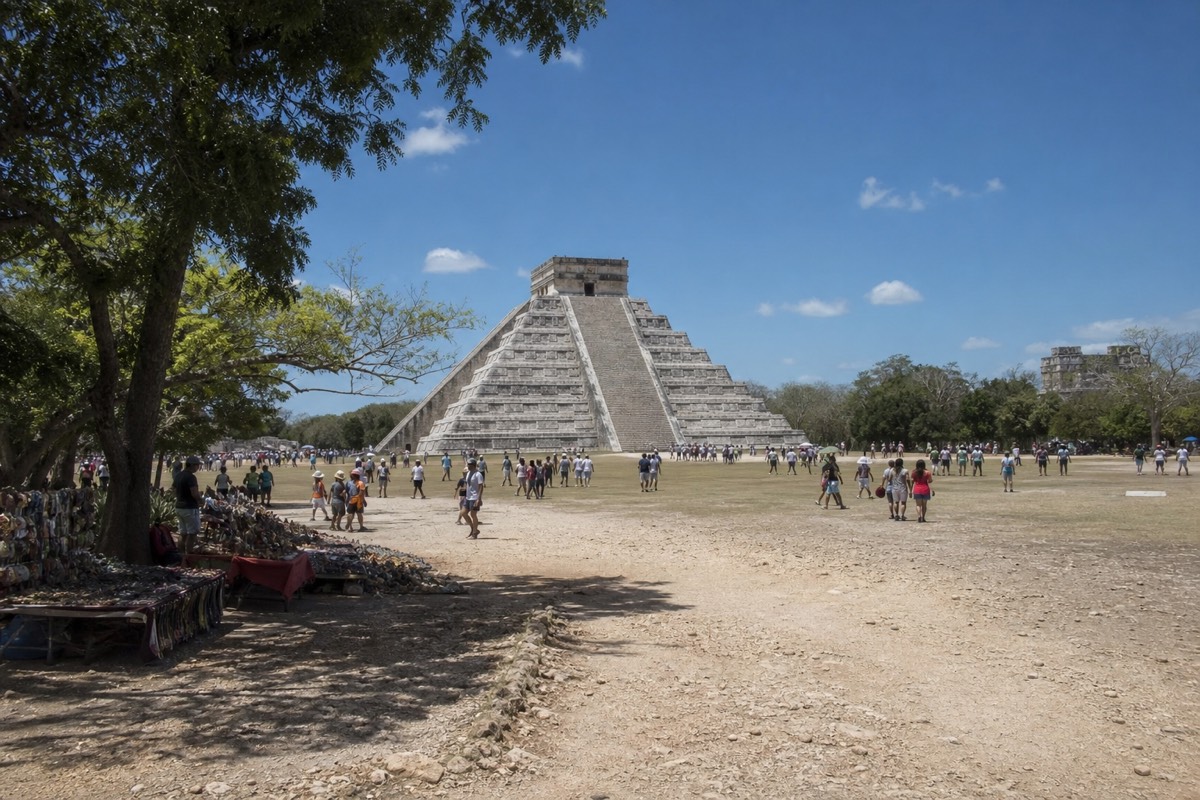
That single sentence covers most of what matters, but the reasons behind it are worth understanding because they let you make a good call even if February does not fit your dates. Two forces shape every visit here: weather and crowds. The dry season, roughly November to April, keeps rain off your camera and heat off your back. Crowds follow a daily rhythm and a yearly one. The daily rhythm is brutal and predictable, buses cluster mid-morning. The yearly rhythm peaks over the December and January holidays, eases through February, and thins across the low, hot summer.
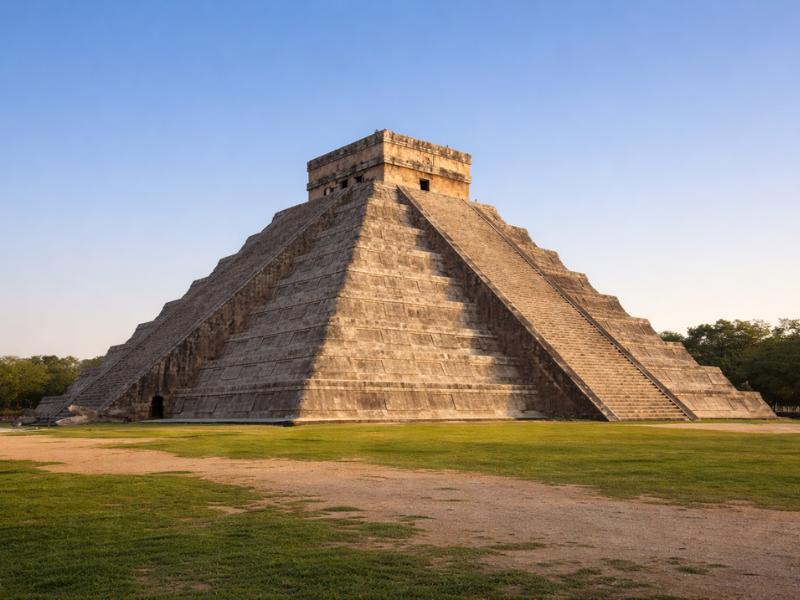
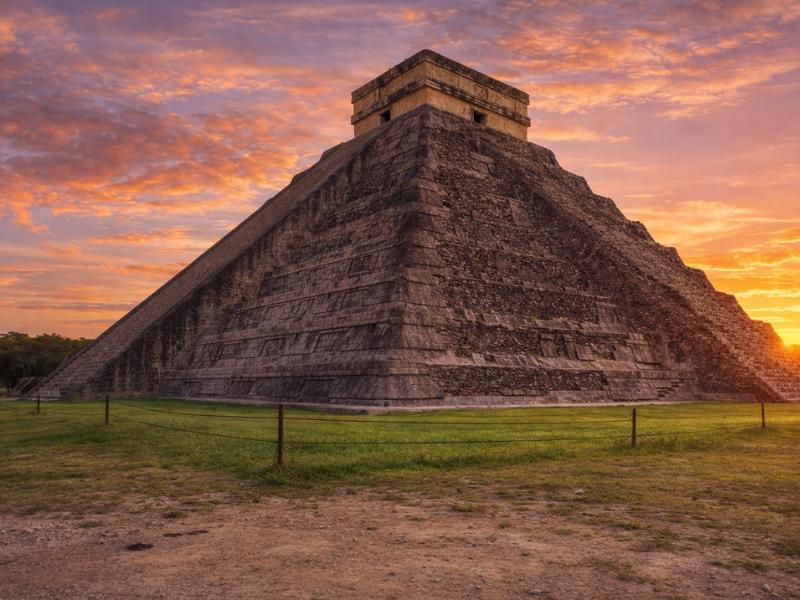
Chichen Itza is not a quiet ruin you stumble on. It is a UNESCO World Heritage Site, listed since 1988 as the Pre-Hispanic City of Chichen-Itza, and one of the New7Wonders of the World. That fame is exactly why timing matters so much. Getting the season and the hour right is the difference between photographing El Castillo against clean sky and elbowing for a gap in a wall of people. This is also the strongest argument for booking a private Chichen Itza tour, because a private schedule is the one thing that lets you hit the perfect window on purpose rather than by luck.
What time of day should you arrive: 8 AM or after 3 PM?
Arrive at the 8 AM opening if you can, full stop. From 8 to 10 the plazas are calm and the air is still cool. Midday, 10 AM to 2 PM, is the worst of crowds and heat together. The second-best window is after 3 PM, when day-trip buses leave and the site empties before the 5 PM close.
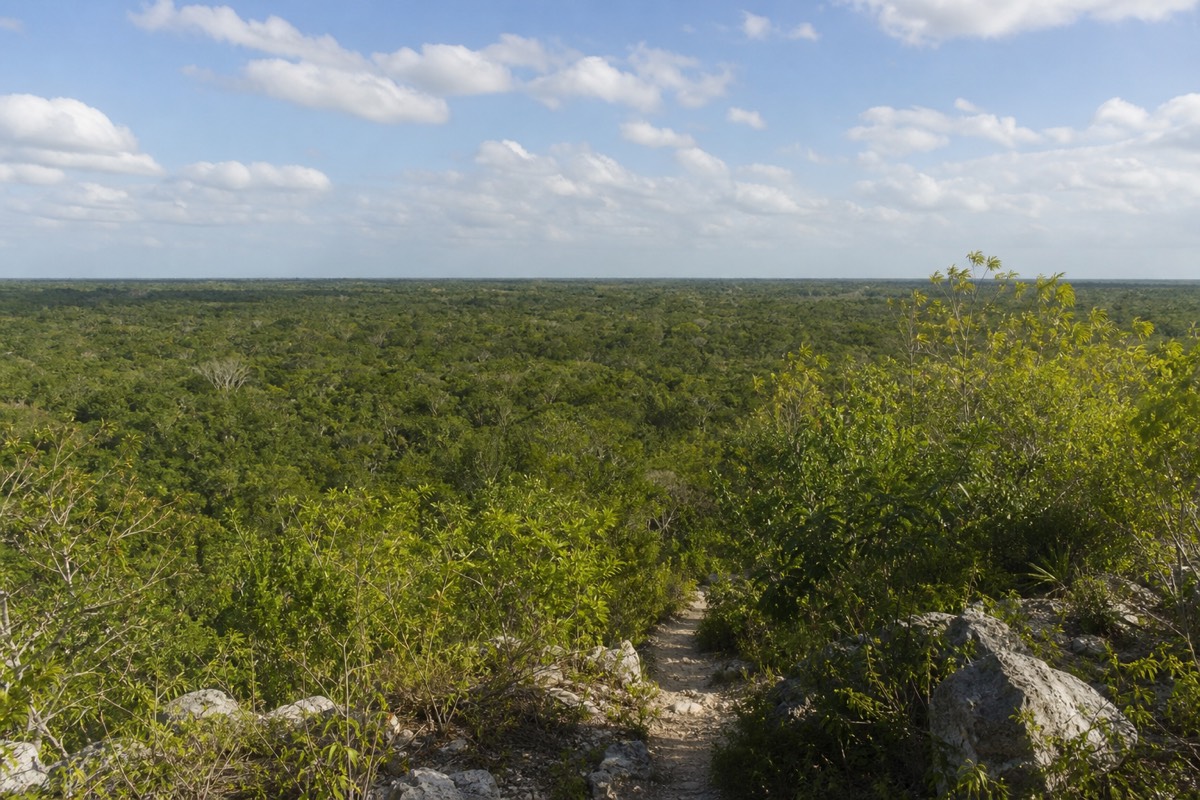
Think of the day in three blocks. The early block, 8 to 10, is the prize. The site opens its gates at 8 and the first coach loads from Cancun do not clear the two-and-a-half-hour drive until well after 10, so for that first stretch you are sharing a very large site with a thin scatter of other early risers. El Castillo has clean sight lines. The Great Ball Court echoes without a hundred phones held up in it. The light is low and warm, which flatters the stone and spares your skin.
The middle block, 10 to 2, is when the pressure peaks. The big operators time their arrivals for late morning, and they all land within the same hour or two. Add the overhead sun to the surge of people and you get the least pleasant version of the day. The late block, after 3, is the quiet comeback. As the buses turn around to make their afternoon deadlines, the crowds drain out and you can walk the central plaza again in relative calm before the site closes.
| Arrival window | Crowd level | Heat | Light for photos | Verdict |
|---|---|---|---|---|
| 8:00 to 10:00 AM | Lowest | Coolest of the day | Soft, warm, low angle | Best. Aim here. |
| 10:00 AM to 2:00 PM | Heaviest | Hottest | Flat, harsh overhead | Avoid if you can |
| 2:00 to 3:00 PM | Still busy, easing | Very hot | Improving | Transitional |
| 3:00 to 5:00 PM | Thinning fast | Cooling slowly | Warm again, long shadows | Solid backup plan |
Only a private departure lets you actually claim the 8 AM block. A shared bus cannot, because it has to run its pickup loop through several hotels first. When a driver leaves at 7 for you alone, as the set-your-own-schedule private tour from any Riviera Maya base does, 8 AM at the gate is a realistic promise rather than a hope.
Which month is best? A month-by-month scorecard
February scores highest: dry, clear, cool and quieter than the holiday peak. November, March and May are strong runners-up. December and January are pleasant but crowded. June through September are the hot, humid, rainier months, still visitable if you go early and hydrate hard.
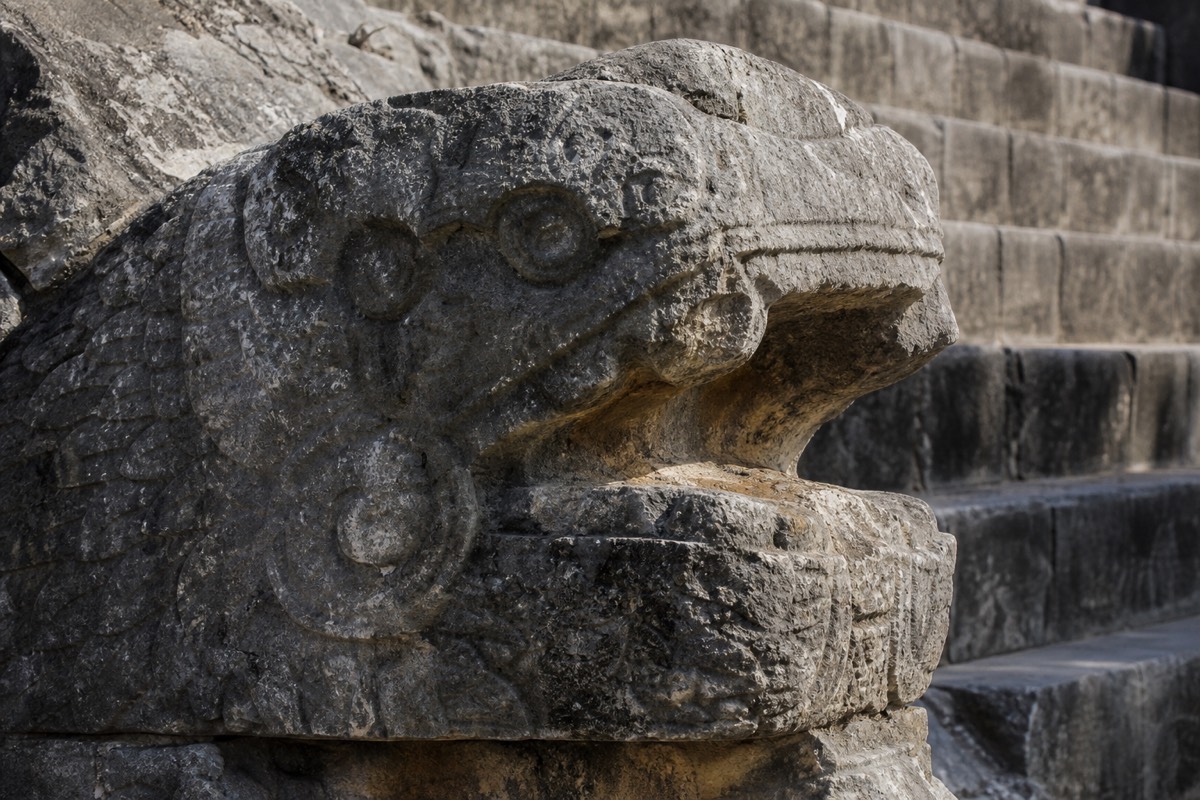
The scorecard below rates each month on a simple 1-to-5 visit scale that blends weather, heat and crowd pressure, with 5 being ideal. It is our own rating, built from the pattern the site follows every year, not a precise forecast. Use it to shortlist, then plan the day itself around the morning window no matter which month you land on.
| Month | Season | Crowds | Heat | Visit score (5 = best) | Note |
|---|---|---|---|---|---|
| January | Dry | High (holiday tail) | Comfortable | 4 | Great weather, busy start |
| February | Dry | Moderate | Comfortable | 5 | The local sweet spot |
| March | Dry | Moderate, spikes at equinox | Warming | 4 | Avoid the equinox days for calm |
| April | Dry | High around Easter | Hot | 3 | Semana Santa fills the site |
| May | Shoulder | Moderate | Hot | 4 | Good value, heat building |
| June | Wet | Lower | Very hot, humid | 2 | Early start essential |
| July | Wet | Moderate (summer travel) | Very hot, humid | 2 | Afternoon showers likely |
| August | Wet | Moderate | Very hot, humid | 2 | Hydrate hard, go at 8 |
| September | Wet | Lowest of the year | Hot, humid | 2 | Quiet but equinox spikes late |
| October | Wet, easing | Low | Warm | 3 | Rain tapering, crowds light |
| November | Dry begins | Moderate | Comfortable | 4 | Season turns, excellent value |
| December | Dry | High from mid-month | Comfortable | 3 | Beautiful, then holiday crush |
Read the table and a pattern jumps out: the best weather and the biggest crowds want to occupy the same weeks. December and January bring lovely, cool, dry days, and they also bring the year's heaviest visitor loads. February threads the needle because the holiday travelers have gone home while the weather stays excellent. That is why we point most people at it first.
The shoulder months deserve more love than they get. November, as the dry season opens, delivers most of February's virtues at softer demand, and May offers the last of the comfortable-adjacent weather before full summer, with crowds thinning as the school year winds down elsewhere. Even the low, wet months have a case: if you can tolerate heat and the odd afternoon storm, September gives you the emptiest version of Chichen Itza in the calendar. There is no wrong month here, only trade-offs, and knowing which trade-off you are making is what lets you plan with confidence rather than hope for the best.
Dry season vs wet season: what actually changes?
The dry season, November to April, gives you reliable clear skies, lower humidity and cooler air, which is why it holds the best months. The wet season, May to October, brings afternoon storms, heavy humidity and the year's fiercest heat, but also the thinnest crowds and lush green surroundings.
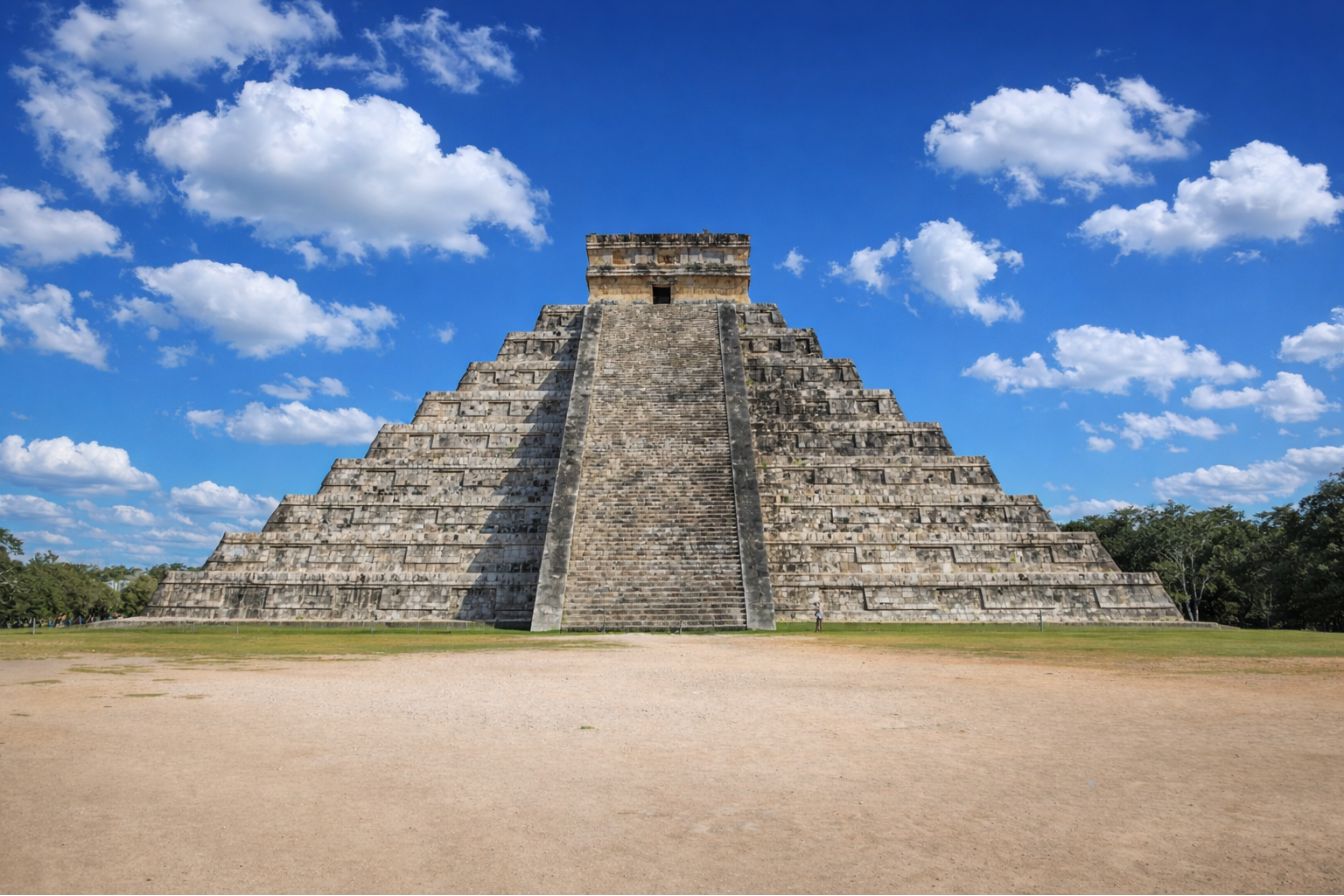
Neither season closes the site, and Chichen Itza is fully worth visiting year-round. What shifts is comfort and predictability. In the dry months you can plan a morning at the ruins and a cenote swim afterward with near-total confidence in the forecast. Rain, when it comes at all, is brief. In the wet months the mornings are often clear and the storms build in the afternoon, which happens to reward the same early-arrival strategy we already recommend: get in at 8, tour the ruins, and be swimming or driving by the time the sky darkens.
| Factor | Dry season (Nov to Apr) | Wet season (May to Oct) |
|---|---|---|
| Skies | Mostly clear and blue | Clear mornings, storms build by afternoon |
| Humidity | Lower, more breathable | High and heavy |
| Peak heat | Warm but manageable | 33 to 38 C (91 to 100 F), feels hotter |
| Crowds | Higher, peaking Dec to Jan | Lighter, lowest around September |
| Landscape | Drier, dustier jungle | Lush and green |
| Best for | First-timers, photographers, families | Budget travelers, crowd-avoiders |
The wet season is not a season to write off. If you can only travel in July or September, you will find shorter lines and greener jungle, and a private schedule matters even more, because getting to the gate at opening buys you the whole clear-morning window before any storm arrives. Pairing the ruins with a cool swim also flips the heat from an enemy into the reason you booked, which is the logic behind combos like the Ek Balam and cenote day.
Should you plan your trip around the equinox?
Only if the shadow serpent is your specific goal. Around March 20 to 21 and September 21 to 22, the late-afternoon sun casts a rippling shadow down El Castillo's north stairway that looks like a descending snake. It is real and striking, but those are the single most crowded days of the year.
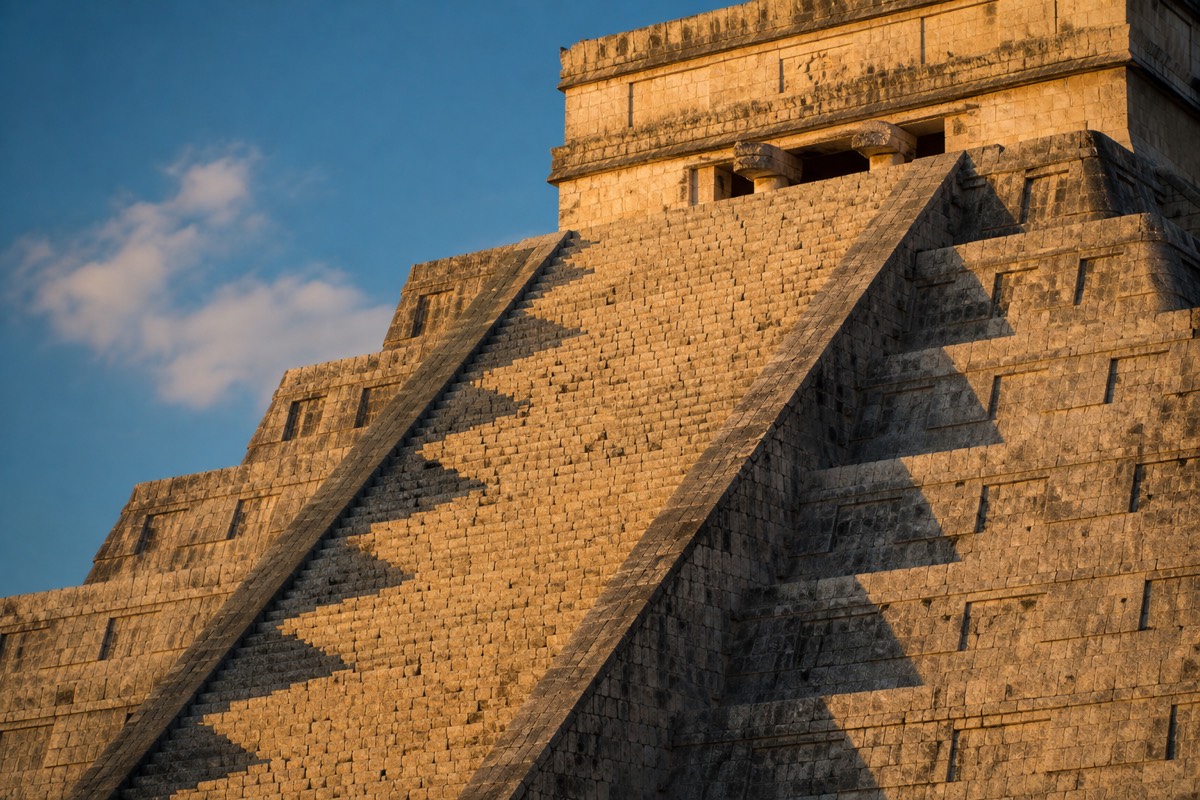
The phenomenon is a genuine feat of Maya engineering, a deliberate alignment built into the pyramid by people tracking the sun with astonishing precision. Mexico's Instituto Nacional de Antropología e Historia manages the site and the crowds swell enormously on the equinox dates, with thousands gathering on the lawn in the afternoon to watch the light drop across the steps between roughly 3 and 5 PM. The energy is festive and the sight is memorable. The trade-off is that everything else about the visit, the parking, the entry, the space to move, gets harder on those exact days.
If you want the serpent, book far ahead and lean on a private tour to soften the logistics, which is the whole point of the guidance in our dedicated piece on planning around the equinox serpent. If you want the ruins in peace, avoid the equinox week entirely and take any clear February or November morning instead. You will trade one dramatic shadow for a calmer, cooler, more personal day with the whole ancient city.
How does the heat actually affect your day?
The heat is the factor most first-timers underestimate. Summer afternoons hit 33 to 38 C (91 to 100 F) and can feel like 40 to 45 C with humidity, and the main plazas offer almost no shade. Midday sun is why the 8 AM arrival is not just about crowds, it is about not cooking on open stone.
Chichen Itza is a wide, exposed site. The great open spaces that make it so photogenic also mean there is nowhere to hide from the sun between structures. In the dry-season winter this is a non-issue, the air is warm and pleasant. In the shoulder months of April and May the heat climbs. In full summer it becomes the defining challenge of the visit, and people who arrive at noon in July often cut their exploration short simply because they are overheating.
| Period | Typical afternoon high | Feels-like risk | What it means for you |
|---|---|---|---|
| Dec to Feb (dry, cool) | Warm, comfortable | Low | Any hour is bearable, mornings ideal |
| Mar to May (dry, warming) | Hot and rising | Moderate | Morning strongly preferred |
| Jun to Aug (wet, peak heat) | 33 to 38 C / 91 to 100 F | High, can feel 40 to 45 C | Go at 8, hydrate constantly, seek shade |
| Sep to Oct (wet, easing) | Hot and humid | Moderate to high | Early start, watch for afternoon rain |
Heat management is a big reason the private format shines. Your own air-conditioned van is a cool refuge before and after, your pace is yours so you can rest in shade whenever you need, and a cenote stop turns the hottest part of the day into a swim. It also makes packing simple and specific, which we lay out in full in our guide to what to pack for the heat.
How does a private tour beat the tour buses on timing?
A group bus is locked to a shared pickup loop and a fixed departure clock, so it usually reaches the gate mid-morning with everyone else. A private tour leaves when you say, which means one van collecting one party and rolling straight to Chichen Itza to be first inside at 8 AM.
The mechanics are simple and they compound. A large coach has to work a circuit, stopping at hotel after hotel to fill its seats before it can even start the long drive. Every stop adds time, and the tour cannot leave the site until its last passenger is back on board, which means you inherit other people's schedules coming and going. A private departure has none of that friction. The van comes to you, it leaves on your clock, and the only pace inside the ruins is your own.
| Timing factor | Group bus tour | Private tour |
|---|---|---|
| Departure | Fixed, after a multi-hotel pickup loop | Your chosen time, direct to you |
| Typical gate arrival | Mid-morning, with the crowd | 8 AM opening if you want it |
| Time at the ruins | Capped by the group schedule | As long as you like |
| Waiting for others | Yes, for the slowest passenger | None |
| Beat the heat | Hard, you arrive as it peaks | Easy, you are done by midday |
This is why timing and format are really the same question. Choosing the best hour only helps if you can actually be there for it, and a private booking is the tool that turns the ideal window into your real itinerary. If you want the fullest version of that early start, the full private day from Cancun is built around a 7 AM pickup for exactly this reason. If you are weighing the format against a cheaper coach, our breakdown of what a private tour actually costs puts real numbers on the trade.
Does timing change how you skip the lines?
Timing and line-skipping work together. Arriving at 8 AM means the ticket windows are barely staffed with demand, so entry is quick no matter what. Arrive mid-morning and the queues stack up, which is when pre-arranged private entry earns its keep by moving you past the ticket-window scrum.
Two lines can slow you at Chichen Itza: the queue to buy tickets and the flow through the turnstiles. Early in the day both are trivial. As the morning fills, the ticket line in particular can swallow real time, because everyone who arrived on the late-morning wave is buying at once. A private tour with entry handled in advance sidesteps that pinch point entirely, and the earlier you arrive the less you even need it, which is a happy sort of redundancy.
The practical takeaway is to stack your advantages. Book private, arrive at opening, and have your entry pre-arranged, and the two forms of waiting essentially vanish. We walk through the ticket structure and the fastest entry routes in detail in our guide to how skip-the-line entry works, which pairs naturally with everything on this page.
What is the best time for your kind of trip?
Photographers want dry-season mornings for empty plazas and low light. Families want cooler months and a private pace so kids do not overheat. Budget travelers get the quietest, cheapest window in September and October. Equinox chasers accept the year's biggest crowds for the shadow serpent. Match the timing to your priority.
There is no single best time that fits every traveler, only the best time for what you are trying to get out of the day. A honeymoon couple after quiet photos has different ideal dates from a family of five managing three kids in the heat, and both differ from a history enthusiast who mainly wants an unhurried guide. The good news is that the private format flexes to all of them, because the one lever that matters most, when you actually arrive, is yours to pull no matter the season.
| Traveler type | Best months | Best hour | Why it works |
|---|---|---|---|
| Photographers | Feb, Nov, Mar | 8 to 10 AM | Clean skies, empty plazas, low warm light |
| Families with kids | Dec to Feb | 8 AM, done by noon | Cooler air, private pace, cenote to cool off |
| Budget travelers | Sep, Oct | 8 AM | Lowest crowds and softest demand of the year |
| History enthusiasts | Any dry-season day | 8 AM | Cool hours for an unhurried guided walk |
| Equinox chasers | Mar 20 to 21, Sep 21 to 22 | 3 to 5 PM | The shadow serpent, at the cost of huge crowds |
| Couples and honeymooners | Feb, Nov | 8 to 10 AM | Calm, romantic, uncrowded stone and sky |
Notice how often the same answer appears in the hour column. Whatever your trip type, the 8 AM window keeps showing up as the winner, and the only real variable is which month best fits your tolerance for heat, crowds and budget. That is the quiet lesson of this whole guide: the season is a preference, but the early arrival is close to a rule, and booking privately is how you keep it.
The best time to visit, at a glance
Best month: February. Best backup months: November, March, May. Best hour: the 8 AM opening. Best backup hour: after 3 PM. Days to avoid for calm: the December and January holidays, Easter week, and the two equinox windows. The tool that makes all of this achievable: a private departure.
Everything above collapses into one clean plan. Pick a dry-season month, aim for the morning, and book a private tour so you can actually be first through the gate. Do that and you get the version of Chichen Itza most visitors never see, quiet plazas, cool air, and the whole ancient city opening up in front of you before the day's crowds and heat arrive.
If you take one thing from this guide, make it the pairing of two decisions: the season sets your comfort, and the arrival hour sets your crowd. Get both right and the site does the rest. Miss the hour and even a perfect February day turns into a slow shuffle through other people's photographs. The private format is simply the tool that keeps that hour in your hands, which is why we keep returning to it. Choose your month, protect your morning, and let the ruins reward you for it.
| If your priority is | Go when | Why |
|---|---|---|
| The best overall balance | February morning | Dry, cool, clear, quieter than the peak |
| Fewest crowds | September, at 8 AM | Lowest visitor numbers of the year |
| Best value dates | November or May | Great weather, softer demand |
| The equinox serpent | Mar 20 to 21 or Sep 21 to 22, late afternoon | The shadow alignment appears, expect huge crowds |
| Coolest, calmest photos | Any dry-season day, 8 to 10 AM | Low sun, empty plazas |
Whatever your dates, the private format is the constant that makes the timing work in your favor rather than against it. Chichen Itza rewards the early and the flexible, and a tour built entirely around your group is the surest way to be both.