The Perfect Private Chichen Itza Tour Itinerary (Hour by Hour)
A great Chichen Itza day is mostly good timing: beat the buses to the ruins, cool off in a cenote, eat well in Valladolid, then roll home. Here is the hour-by-hour plan.
At a glance: the perfect private Chichen Itza day
Our hour-by-hour template, built from the site hours, drive times and arrival timing we plan around for guests.
What does the perfect private Chichen Itza day look like?
Leave early, arrive at the 8:00 AM opening before the buses, spend two to three guided hours at the ruins while it is cool, swim in a cenote when the heat peaks at midday, eat a Yucatecan lunch in Valladolid, then drive home relaxed. A private tour lets you set that rhythm instead of inheriting a group schedule.
Almost everything that makes or breaks a Chichen Itza day comes down to timing, and timing is exactly what a private tour hands you. The ruins are calm and photogenic at opening and a hot, crowded scrum by late morning. Get there first, front-load the walking while the air is bearable, then chase shade and water for the rest of the day.
The plan below is the shape most of our best days take. It flexes by base and by group, but the bones stay the same: ruins early, water midday, town for lunch, home in the afternoon. Build your day around our private Chichen Itza tours and each of those blocks bends to your pace rather than a bus timetable.
What separates a great day from a merely fine one is not the list of stops, which most tours share, but the order and the timing. Do the same four things in the wrong sequence, arriving at the ruins at eleven and swimming in the afternoon, and you spend the best light stuck in traffic and the worst heat out on the open plaza. The private format exists to protect the sequence. You are not sharing a bus with thirty strangers whose bathroom breaks and souvenir stops dictate your clock, so the plan below actually holds together on the ground.
The hour-by-hour timeline
From Cancun the day runs roughly 7:00 AM pickup, 8:00 to 9:45 AM arrival, two to three hours guided at the ruins, a cenote swim near midday, lunch in Valladolid around 1:00 to 2:00 PM, then a drive home by late afternoon. Closer bases shift the clock earlier or shorter, but the sequence holds.
Here is the template we build from. Treat the times as a planning allowance; your exact clock depends on your base, your pace and any add-ons.
| Time | Where | What happens |
|---|---|---|
| 7:00 AM | Your hotel | Private pickup, cooler stocked, drive inland |
| 8:00 to 9:45 AM | Chichen Itza gate | Skip-the-line entry ahead of the buses |
| 9:45 AM to 12:00 PM | The ruins | Guided walk of El Castillo, ball court, observatory |
| 12:00 to 1:00 PM | Cenote | Swim to escape the midday heat |
| 1:00 to 2:30 PM | Valladolid | Yucatecan lunch, colonial plaza stroll |
| 2:30 to 3:00 PM | On the road | Relaxed drive back toward the coast |
| 5:00 to 5:30 PM | Your hotel | Drop-off, roughly a 10 to 12 hour day |
That flow maps closely onto the premium full day from Cancun, which uses a 7:00 AM pickup to reach the gate before 10:00 AM and folds in a cenote and Valladolid. Our companion guide on how many hours you need stress-tests this timing for different bases.
Notice how the day front-loads the effort. The two hardest things, the long drive and the hot walking, both happen before lunch, while everyone is fresh and the air is coolest. By the time energy dips in the early afternoon, you are floating in a cenote or sitting in a shaded plaza with a plate of cochinita pibil, not trudging across a baking site. That is deliberate. A day built the other way round, saving the ruins for after lunch, fights the heat and the crowds at exactly the wrong moment and leaves everyone flat.
The clock is a guide, not a cage. Some groups want a slow morning and a long lunch; others want to add a second site and keep moving. Because the vehicle and guide are yours for the day, you can spend an extra half-hour at the observatory if the astronomy grabs you, or cut the town stop short if the group would rather get back to the beach. The times above are the well-worn default, and they exist precisely so you have something sensible to adjust from.
Morning at the ruins
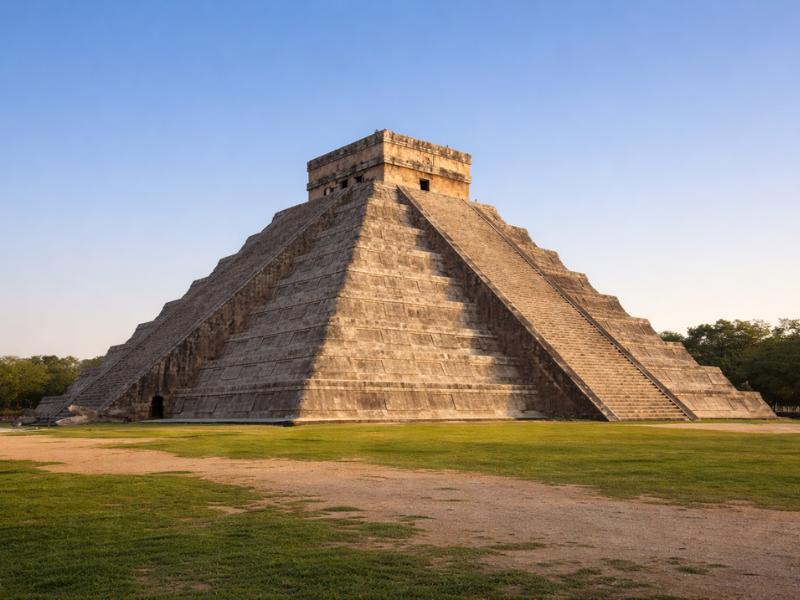
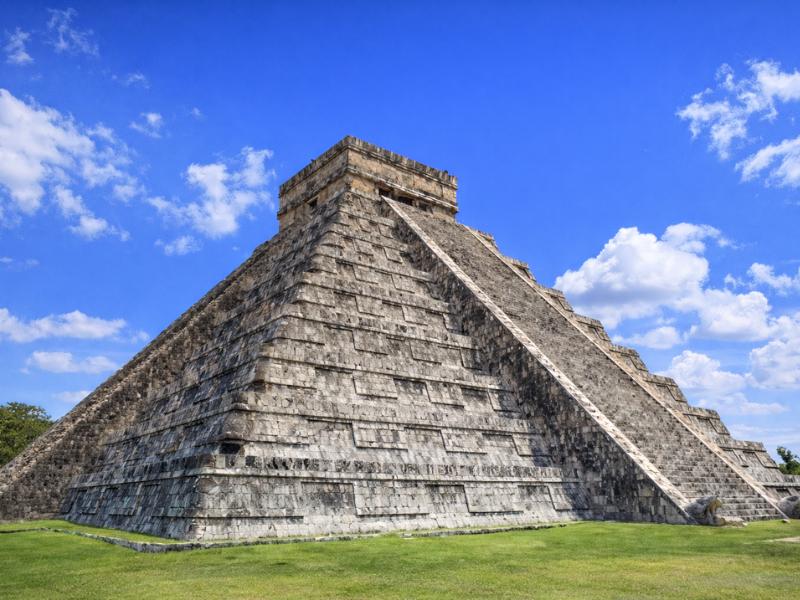
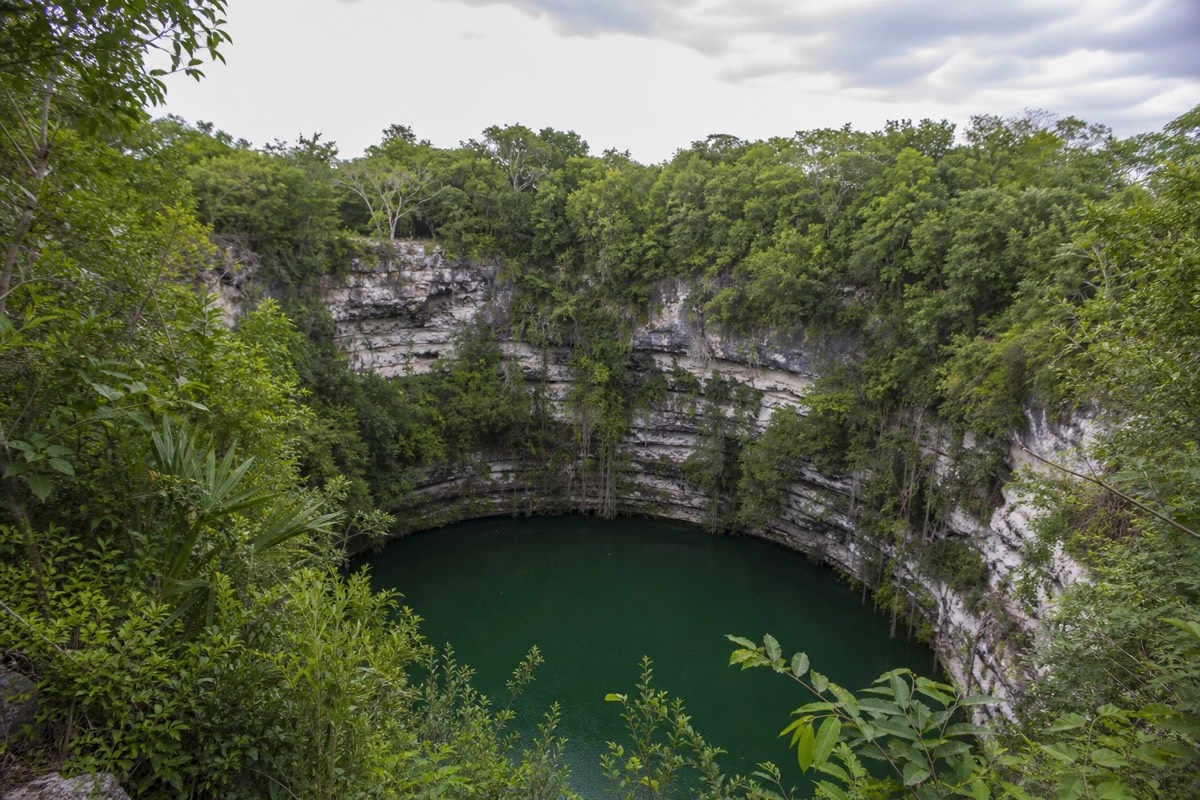
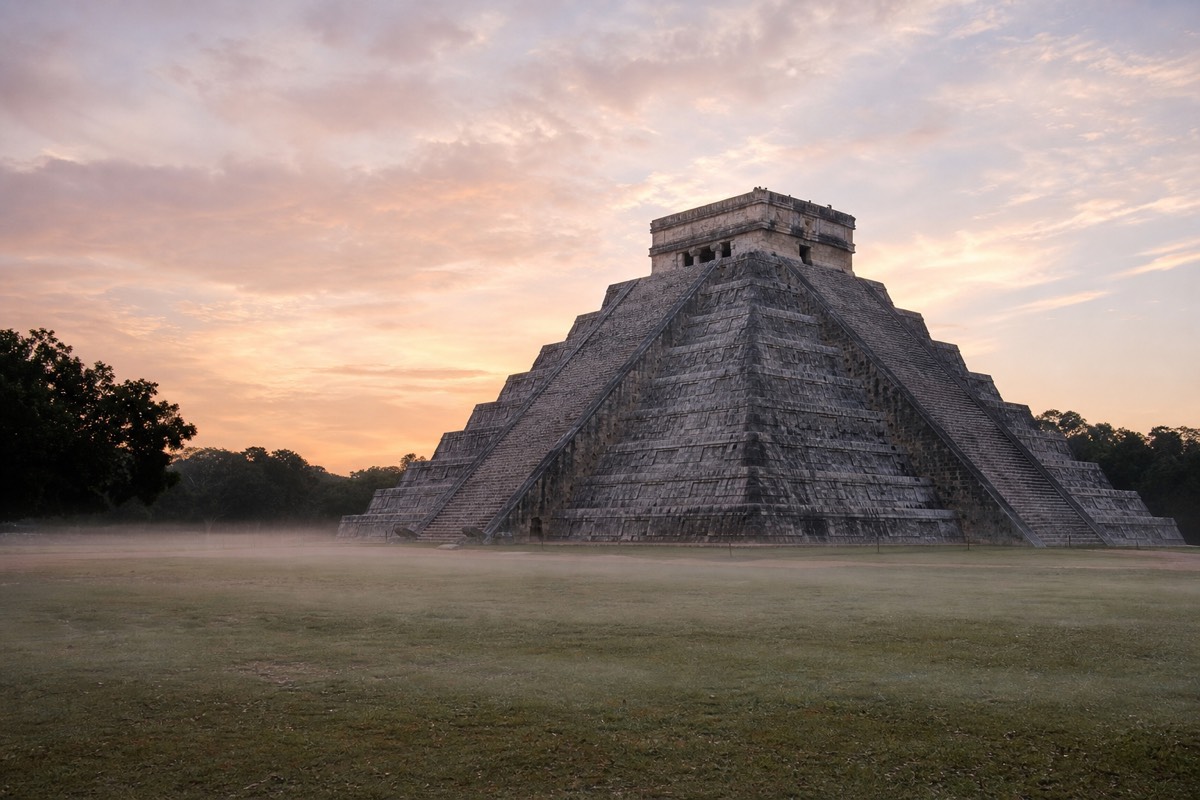
Spend the cool early hours walking the site with a guide, because that is when Chichen Itza is at its best: soft light, thin crowds and a story behind every structure. Cover El Castillo, the Great Ball Court, the Temple of the Warriors, El Caracol observatory and the Sacred Cenote before the heat and buses arrive around 10:00 to 11:00 AM.
The order matters. Start at the far structures and work back toward the entrance, so you finish near the exit as the crowds thicken. A guide reads what you cannot see on your own: the equinox shadow serpent on the north stairway, the acoustics that carry a clap across the ball court, the Venus alignments built into El Caracol. You cannot climb the structures, so this narration is the experience.
Leave time to simply stand and look, too. It is easy to march from marker to marker ticking off structures, but the scale of the place only lands when you pause in the middle of the plaza and take it in whole. Ask your guide for the story behind the Sacred Cenote, the deep natural sinkhole where the Maya made offerings, and the site stops being a set of ruins and becomes a living city in your mind. That shift is what people remember, and it is only possible when you are not being hurried along by a group.
| Structure | Time to give it | Why it matters |
|---|---|---|
| El Castillo (Pyramid of Kukulcan) | 25 to 35 min | The centrepiece; equinox serpent and the clap echo |
| Great Ball Court | 20 to 30 min | Largest known court; ritual game and acoustics |
| Temple of the Warriors | 15 to 20 min | Columns and carvings of Maya military power |
| El Caracol observatory | 15 to 20 min | Astronomy built into the stone, tracking Venus |
| Sacred Cenote | 15 min | The sinkhole where offerings were made |
Because the site is a UNESCO World Heritage listing and a New7Wonder, the crowds are real and the early start is the whole game. For the finer points of timing, the best arrival time covers the day and the season.
The reward for arriving at eight is not subtle. For the first hour or so you can photograph El Castillo with almost no one in the frame, hear your guide without shouting, and feel the scale of the place in relative quiet. By the time the mass-market groups pour in around ten or eleven, you are already deep into the site and working your way back toward the exit, moving against the tide rather than stuck in it. That single hour of head start is the highest-value part of the whole itinerary, and it is the part a private tour is built to give you.
A good guide also manages the shade for you. A thirty-year veteran knows where the sun falls at each hour and routes the walk to keep you comfortable, pausing under the few sheltered spots to tell the longer stories and saving the exposed stretches for quick crossings. That is knowledge you cannot pack, and it is a large part of why the site's meaning lands so much harder with an expert beside you than it does from a guidebook read in the heat.
Midday at the cenote
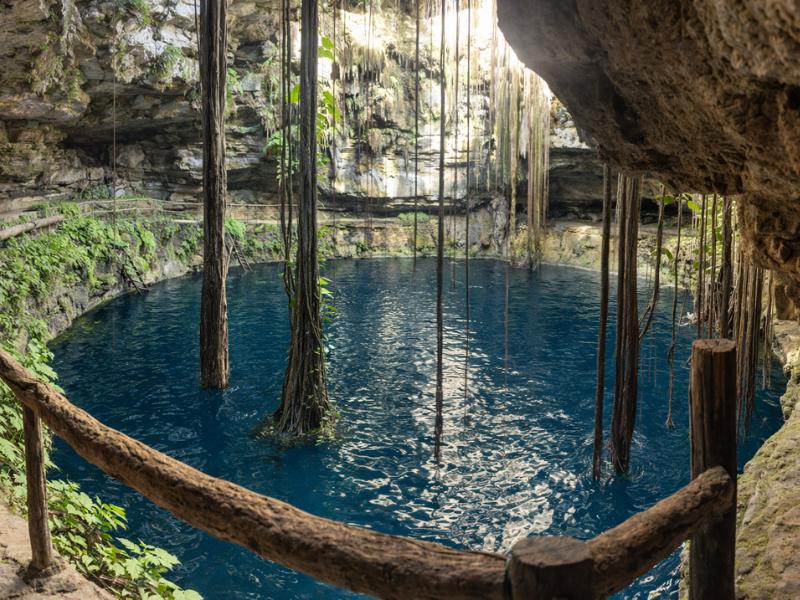
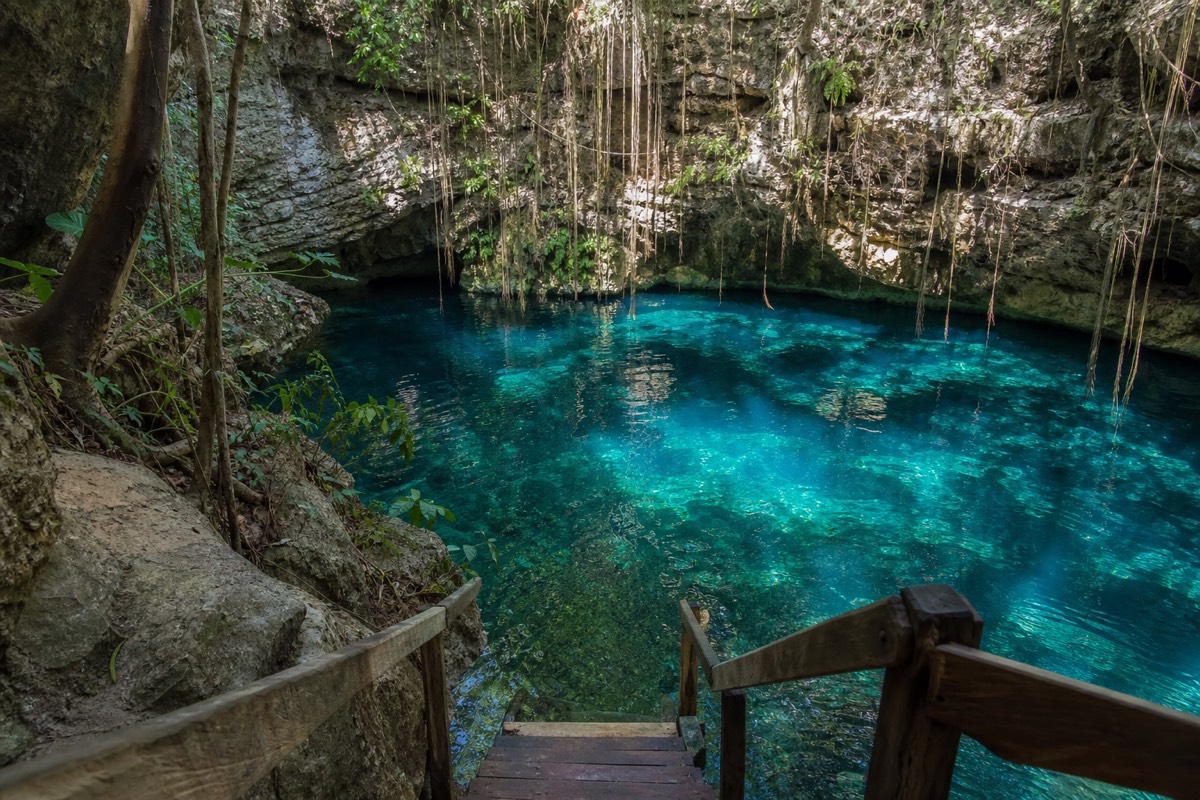
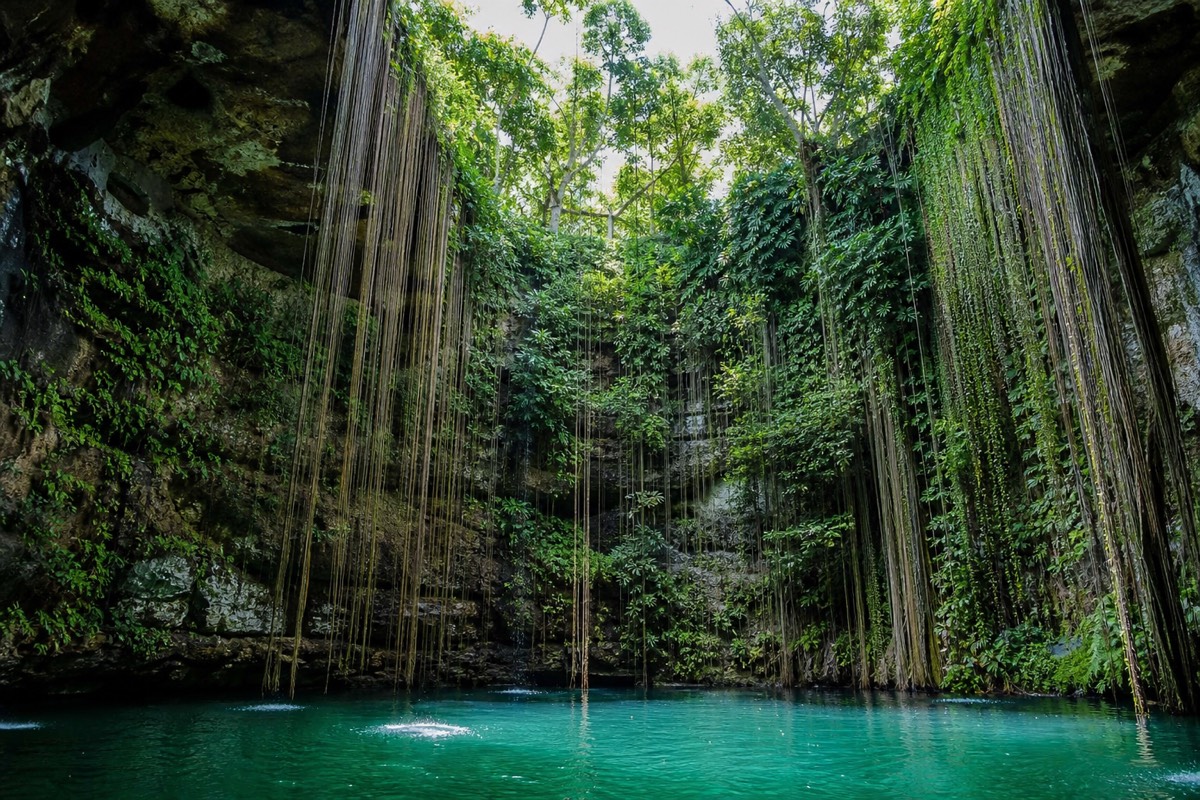
Swim when the heat peaks. After a morning at the ruins, a midday cenote turns the hottest part of the day into the best part. Ik Kil is the famous open cenote with hanging vines; Yokdzonot, Suytun and Oxman are quieter. If your tour bundles the swim, entry is covered; on your own it runs roughly MXN 150 to 300 per person.
The midday cenote is not just a nice extra; it is heat management. By noon the summer air can feel 40 to 45C with almost no shade at the ruins, so dropping into cool freshwater is the smartest move on the itinerary. Wear your swimwear under your clothes to skip the changing queue, and life jackets are usually provided.
| Cenote | Vibe | Note |
|---|---|---|
| Ik Kil | Famous, open, dramatic vines | Busy; the classic postcard swim |
| Yokdzonot | Quiet, community-run, jungle-fringed | Calm alternative, fewer crowds |
| Suytun | Cave with a light beam | Photogenic, can get busy for photos |
| Oxman | Hanging roots, near Valladolid | Often paired with a hacienda |
Which one suits you depends on whether you want the iconic shot or the quiet swim; picking the right cenote compares them properly, and fitting a cenote into one day confirms it slots in without stress.
The cenote is also a natural reset for the group's mood. Kids who have run out of patience with ancient stones come alive in the water, and adults who have been on their feet all morning get to sit back and cool down. Wear your swimwear under your clothes, keep a quick-dry towel and flip-flops in the day bag, and stash your phone in a dry pouch so you can still catch the light filtering through the vines. Life jackets are typically provided, so even non-swimmers can float and enjoy it, which matters on a family day.
Lunch in Valladolid
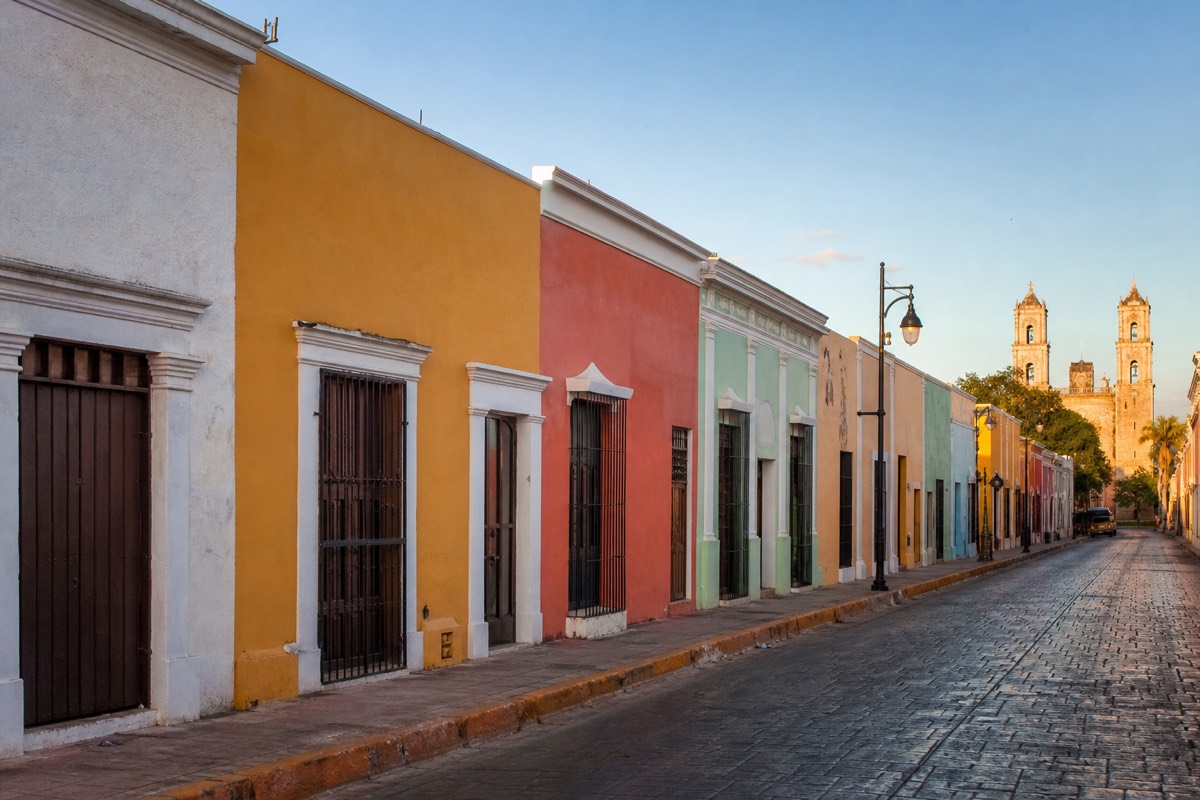
Break for lunch in Valladolid, the colonial Pueblo Magico just 45 minutes from the ruins. Its shaded plaza, cathedral and Cenote Zaci make an easy midday stop, and the local kitchen turns out cochinita pibil, panuchos and marquesitas. A 45 to 90 minute stop refuels the group and adds a second flavour to the day beyond the stones.
Valladolid is the reason so many private days feel complete rather than just a there-and-back to the ruins. After the heat and the history, a table in the shade with real Yucatecan food resets everyone. The town is walkable, colourful and calm, and the drive from Chichen Itza is short. There is a real pleasure in swapping the grandeur of the ruins for a plate of slow-roasted pork and a cold agua fresca under a shaded arcade, and it gives the group a proper pause before the road home rather than one long uninterrupted drive.
| Dish | What it is |
|---|---|
| Cochinita pibil | Slow-roasted pork in achiote and citrus, the regional signature |
| Panuchos | Stuffed tortillas topped with meat and pickled onion |
| Sopa de lima | Bright lime and turkey soup, light in the heat |
| Marquesita | Crisp rolled crepe, often cheese and sweet filling |
| Agua de chaya | Refreshing local green drink |
On the flexible private van you choose how long to linger in the plaza, and you can add the in-town Cenote Zaci if the group still has energy. That freedom is exactly what a fixed group tour cannot give you.
Valladolid also breaks up the drive at just the right point. Rather than a single long haul back to the coast after the ruins, you split the return with a proper meal and a stretch of the legs, which makes the whole day feel less like a commute. The town is small enough to see the heart of it in an hour: the main plaza, the cathedral, a colourful street or two, and a bakery or ice-cream stop for the road. If your group prefers a hacienda buffet over a town restaurant, some private days route through one near Valladolid instead, and the food is every bit as regional.
Optional add-ons to your day
Depending on time and interest, you can layer in Ek Balam's climbable pyramid, the yellow town of Izamal, the Rio Lagartos flamingos and Las Coloradas pink lakes, or a shaman-led temazcal ceremony. Each adds hours, so a private tour is how you decide which fit without breaking the day's rhythm.
The core day, ruins plus cenote plus Valladolid, is complete on its own. But the Yucatan around Chichen Itza is rich, and a private format lets you bolt on what your group cares about. The table shows what each add-on gives you and roughly what it costs in time.
| Add-on | Adds | On this tour |
|---|---|---|
| Ek Balam climbable pyramid | A few hours; the last nearby climb | Chichen Itza and Ek Balam day |
| Izamal, the yellow town, plus ATV | Half a day of colour and adrenaline | Chichen Itza and Izamal ATV day |
| Rio Lagartos and Las Coloradas | Flamingos and pink lakes, a longer day | The Ik Kil and flamingos day |
| Temazcal purification ceremony | An evening ritual; longest day | The shaman-led temazcal add-on |
| Night light-and-sound show | The ruins after dark | Evening tour option |
Add-ons stretch the clock, so weigh them against your group's stamina. A day that tries to do everything ends up rushing the one thing you came for, which is the ruins themselves.
Our honest advice is to pick at most one big add-on and let the core day breathe. The temazcal, for instance, is a genuinely special evening but it pushes the day past fourteen hours, so it suits travellers who want depth over coverage. The flamingos at Rio Lagartos and the pink lakes of Las Coloradas sit well north of the ruins, which makes for a long but memorable loop. Ek Balam is the gentlest addition, since it is close and gives climbers the pyramid they cannot ascend at Chichen Itza. Match the add-on to the one thing your group would regret missing, and skip the rest.
How to build your own itinerary
Start from your base and work outward. From Cancun or the Riviera Maya, plan a full 10 to 12 hour day with an early start. From Valladolid you are 45 minutes out and can go later and shorter. From Tulum add drive time each way. Fix the 8:00 AM arrival first, then slot the cenote and lunch around it.
The base sets the clock more than anything else, because the drive is the biggest variable. The table shows how the same template shifts depending on where you sleep.
| Base | Suggested departure | How the day shifts |
|---|---|---|
| Cancun | ~7:00 AM | Full day, 2 to 2.5 h each way, early start |
| Playa del Carmen | ~6:30 to 7:00 AM | Full day, route-dependent drive |
| Tulum | ~6:30 AM | Longer day; a cenote near Valladolid fits well |
| Valladolid | ~7:30 AM | Short hop; later start, shorter day possible |
| Merida | ~7:00 AM | Approach from the west, ~120 km |
Whichever base you choose, the one rule that never bends is the early arrival. To pin down the getting-there details from each starting point, plan by your base, and if you are still deciding on the format, our look at private versus group shows why the private day protects this timing.
To build your own version, work backward from two fixed points. The first is the 8:00 AM gate, which anchors your departure: subtract the drive from your base and you have your pickup time. The second is your comfortable return hour, which caps how many add-ons you can realistically fit. Everything in between, the length of the ruins walk, the cenote, the lunch, is yours to dial up or down. Sketch it the night before, share it with your guide at pickup, and let them fine-tune the route with local knowledge you do not have.
Common mistakes that ruin the day
The classic errors are arriving late into the midday crush, underpacking water and sun cover, trying to cram in too many sites, and expecting to climb the pyramid. Each one is avoidable with a private tour that controls the timing, carries a stocked cooler and shapes the route around what your group actually wants.
Late arrival is the biggest one. Show up at 11:00 AM and you inherit the buses, the heat and the queue all at once, and the magic of the empty morning site is gone. Overloading the day is the second: two ruins plus a cenote plus flamingos sounds efficient and feels exhausting, and you end up rushing the wonder you came for.
A quieter mistake is skipping breakfast and under-fuelling for a long day. From a coastal base you are looking at ten to twelve hours door to door, much of it walking in heat, and running on an empty stomach is how the afternoon turns miserable. Eat before the early pickup, keep snacks and water in the van, and treat the Valladolid lunch as a real meal rather than an afterthought. Small logistics like a bathroom stop before the ruins and cash ready for the gate keep the day flowing, and on a private tour your guide handles most of them so you can stay focused on the ruins themselves.
The rest are small but real. Bring enough water and sun cover for a shadeless site where summer heat feels 40 to 45C. Do not plan to climb El Castillo; that has been prohibited for years after a fatal fall in the mid-2000s, and the fee is a two-part charge managed with INAH oversight, around MXN 600 to 700 per foreign adult in 2026. Get the timing right, pack light but smart, and a private Chichen Itza day is one of the best you will have in Mexico.
One more mistake is treating the guide as optional. Because you cannot climb the structures, the experience is entirely about understanding what you are looking at, and a rushed self-guided lap leaves most of the meaning on the table. Booking a knowledgeable guide, whether the on-site historian or a full private day, is what turns a photo stop into the wonder it deserves to be. If you are assembling the trip piece by piece, picking the right cenote and fitting a cenote into one day round out the two decisions people most often get wrong.
Put simply, the perfect private Chichen Itza day is early, unhurried and well-sequenced. Beat the buses to the gate, let a guide read the ruins to you while the air is cool, drop into a cenote when the heat peaks, eat a real Yucatecan lunch in Valladolid, and roll home in the afternoon glad you did it this way. The stops are the same ones every visitor sees. The difference is the timing and the pace, and that is precisely what a private tour hands you.